链表的JAVA实现
在JAVA中,JAVA的集合(collection)实现了各种常用的数据结构,包括链表。
下面自己来实现简单的单链表。链表是由一个个的相互连接的结点组成,结点又由数据域和指针域组成,指针域指向下一个结点。
1
2
3
| ┌───┬───┐ ┌───┬───┐ ┌───┬───┐ ┌───┬───┐
│ A │ ●─┼──>│ B │ ●─┼──>│ C │ ●─┼──>│ D │ │
└───┴───┘ └───┴───┘ └───┴───┘ └───┴───┘
|
JAVA没有struct结构体,所以用一个Node Class表示结点:
1
2
3
4
5
6
7
8
9
10
11
12
13
14
15
16
17
18
19
20
21
22
23
24
25
26
27
28
29
30
31
32
33
|
public class ListNode<E>{
private E data;
private ListNode<E> next = null;
public ListNode(E data) {
this.data = data;
}
public ListNode(E data, ListNode<E> next) {
this.data = data;
this.next=next;
}
public void setData(E data) {
this.data = data;
}
public E getData() {
return this.data;
}
public void setNext(ListNode<E> next) {
this.next = next;
}
public ListNode<E> getNext() {
return this.next;
}
}
|
链表反转
面试题5 - 从尾到头打印链表并不算是真正的链表反转,它只是将链表中的元素放进到新的数组对象中去了。
对于链表的反转问题,可以新建链表及节点关系;也可以在原有列表的基础上进行指针的变换,这样考察点就在于指针的运用(pointer manipulation)。这里主要阐述在原有列表的基础上进行指针的变换的方法。
迭代法(Iterative)
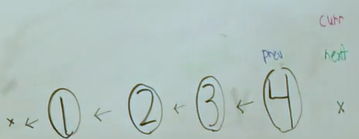
迭代法是从前向后顺序地交换两个节点的相对位置。
我们需要三个指针:
- pre pointer:存储上一个节点,因为是单链表,在迭代过程中,当链表头移动到下一个结点后,就无法访问上一个结点了。
- cur pointer:指示我们当前的指向。
- next pointer:当我们改变当前结点指向后,我们就会丢失原来的下一个结点,所以需要一个结点来储存,才能知道我们的下一次迭代的前进方向。
1
2
3
4
5
6
7
8
9
10
11
12
13
14
15
16
17
18
19
20
21
22
23
24
|
public static ListNode<Integer> LinkedListReverse1(ListNode<Integer> listNode) {
if (listNode == null) {
return listNode;
}
ListNode<Integer> pre = null;
ListNode<Integer> cur = listNode;
ListNode<Integer> next = new ListNode<>(null);
while (cur != null) {
next = cur.getNext();
cur.setNext(pre);
pre = cur;
cur = next;
}
return pre;
}
|
Time: O(n)
Space: O(1)
递归法(Recursive)
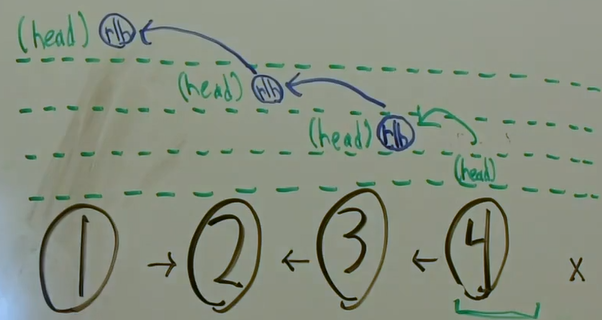
递归法是从后向前逆序地交换两c个节点的相对位置。递归即是借助了系统的”栈”。
每一次迭代就像是向另一个人发出了命令:将我(本节点,本此迭代的head)后面的所有结点反转,不包括我。
每一次迭代,我们有的资源是返回的反转后的剩下链表(rlh,reversed list head)以及本节点(head);每一次迭代,执行的动作是,将rlh指向我自己,再将新的rlh返回到上一次迭代。
1
2
3
4
5
6
7
8
9
10
11
12
13
14
15
16
|
public static ListNode<Integer> LinkedListReverse2(ListNode<Integer> listNode) {
if (listNode == null || listNode.getNext() == null) {
return listNode;
}
ListNode<Integer> reHead = LinkedListReverse2(listNode.getNext());
listNode.getNext().setNext(listNode);
listNode.setNext(null);
return reHead;
}
|
Time: O(n)
Space: O(n)
代码
ListNode.java
1
2
3
4
5
6
7
8
9
10
11
12
13
14
15
16
17
18
19
20
21
22
23
24
25
26
27
28
29
30
31
32
33
34
35
36
37
38
39
40
41
42
43
44
45
46
47
48
49
50
51
52
53
54
55
56
57
58
59
60
61
62
63
64
65
66
67
68
69
70
71
72
73
74
| public class Main {
public static void main(String[] args) {
ListNode<Integer> node0 = new ListNode<>(0);
ListNode<Integer> node1 = new ListNode<>(1);
ListNode<Integer> node2 = new ListNode<>(2);
ListNode<Integer> node3 = new ListNode<>(3);
node0.setNext(node1);
node1.setNext(node2);
node2.setNext(node3);
ListNode<Integer> h1 = node0;
System.out.println("反转前的链表:");
while (h1 != null) {
System.out.println(h1.getData());
h1 = h1.getNext();
}
node0 = LinkedListReverse1(node0);
ListNode<Integer> h2 = node0;
System.out.println("反转后的链表:");
while (h2 != null) {
System.out.println(h2.getData());
h2 = h2.getNext();
}
}
public static ListNode<Integer> LinkedListReverse1(ListNode<Integer> listNode) {
if (listNode == null) {
return listNode;
}
ListNode<Integer> pre = null;
ListNode<Integer> cur = listNode;
ListNode<Integer> next = new ListNode<>(null);
while (cur != null) {
next = cur.getNext();
cur.setNext(pre);
pre = cur;
cur = next;
}
return pre;
}
public static ListNode<Integer> LinkedListReverse2(ListNode<Integer> listNode) {
if (listNode == null || listNode.getNext() == null) {
return listNode;
}
ListNode<Integer> reHead = LinkedListReverse2(listNode.getNext());
listNode.getNext().setNext(listNode);
listNode.setNext(null);
return reHead;
}
}
|
Main.java
1
2
3
4
5
6
7
8
9
10
11
12
13
14
15
16
17
18
19
20
21
22
23
24
25
26
27
28
29
30
31
32
33
34
35
36
37
38
39
40
41
42
43
44
45
46
47
48
49
50
51
52
53
54
55
56
57
58
59
60
61
62
63
64
65
66
67
68
69
70
71
72
73
74
| public class Main {
public static void main(String[] args) {
ListNode<Integer> node0 = new ListNode<>(0);
ListNode<Integer> node1 = new ListNode<>(1);
ListNode<Integer> node2 = new ListNode<>(2);
ListNode<Integer> node3 = new ListNode<>(3);
node0.setNext(node1);
node1.setNext(node2);
node2.setNext(node3);
ListNode<Integer> h1 = node0;
System.out.println("反转前的链表:");
while (h1 != null) {
System.out.println(h1.getData());
h1 = h1.getNext();
}
node0 = LinkedListReverse1(node0);
ListNode<Integer> h2 = node0;
System.out.println("反转后的链表:");
while (h2 != null) {
System.out.println(h2.getData());
h2 = h2.getNext();
}
}
public static ListNode<Integer> LinkedListReverse1(ListNode<Integer> listNode) {
if (listNode == null) {
return listNode;
}
ListNode<Integer> pre = null;
ListNode<Integer> cur = listNode;
ListNode<Integer> next = new ListNode<>(null);
while (cur != null) {
next = cur.getNext();
cur.setNext(pre);
pre = cur;
cur = next;
}
return pre;
}
public static ListNode<Integer> LinkedListReverse2(ListNode<Integer> listNode) {
if (listNode == null || listNode.getNext() == null) {
return listNode;
}
ListNode<Integer> reHead = LinkedListReverse2(listNode.getNext());
listNode.getNext().setNext(listNode);
listNode.setNext(null);
return reHead;
}
}
|
References
一篇文章搞定面试中的链表题目(java实现)
Java单链表反转 详细过程
【LeetCode算法题详解】链表反转(已添加字幕)